
The Think Thermally and MotorTalk blogs are updated monthly, written by Snell instructors and consultants for those interested or involved with infrared thermography and electric motor testing (EMT). Electrical, mechanical, building applications, and EMT are covered in this blog along with discussions on theory, equipment, tips, news, and much more.
Español

Seamos curiosos al realizar inspecciones

Sin importar lo complejo de una inspección infrarroja, podría ser muy recomendable que los usuarios de la termografía siempre se mantengan muy inquisitivos del entorno de su área de trabajo, ya sea al realizar inspecciones industriales o residenciales. Nunca se sabe cuando la atención a los detalles podría ayudar a descubrir y ojalá hasta remediar cualquier condición insegura que se pudiese encontrar. A continuación, presentamos algunos ejemplos de la vida real con los que nos hemos encontrado:

Caso #1:
Motor Talk

Building a Motor Testing Tool Kit

Today’s motor testers challenge the term “field portability,” in particular the de-energized test instruments.  The power supplies necessary to provide the high insulation test voltages are the main reason.  Expedient testing can be hampered by not carrying the necessary tools with you to handle the majority of the circuits and tests to be performed. 

IR Talk

Mechanical Infrared Inspections; "Is this really a problem?"

Many of the folks I work with in classes or in the field have electrical backgrounds. Most electrical inspections are “exception based”. That is, when you see something that’s not right, it is a problem and it is reported. Mechanical inspections on the other hand can be quite difficult depending on what type of equipment one is inspecting. Looking at pumps can be a challenge; the different drive systems alone can raise a number of questions as to what is normal, critical, and the basic question of what the failure modes are with this piece of equipment.

Français

Un « point froid » indiquerait-il un problème électrique?

Ce que recherchent habituellement les thermographistes, ce sont les « points chauds », négligeant ainsi de chercher les « points froids », qui potentiellement peuvent être significatifs.

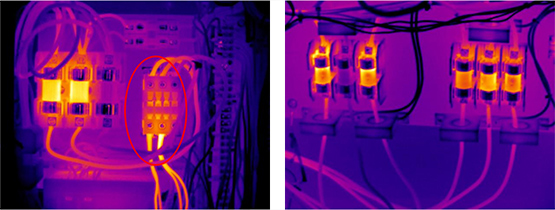
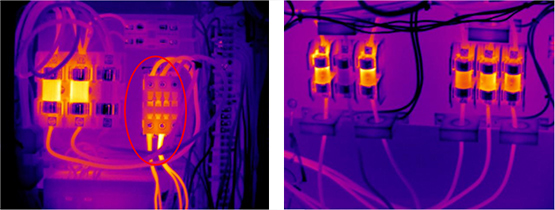
Comment expliquer les images ci-dessous? Et, comment doit-on « rapporter » les anomalies?

Un « point froid » indiquerait-il un problème électrique 2?

Español

¿Puede algo ‘frío’ ser indicador de una falla eléctrica?

Como usuarios de la termografía tenemos plasmado en nuestras mentes el buscar puntos calientes, pero ¿Será posible que en la búsqueda de estos puntos calientes estemos pasando por alto puntos ‘fríos’ potencialmente importantes?

Considerando las imágenes de la parte de abajo, podríamos preguntarnos ¿De qué se trata?, o ¿Cuál es la causa?, También podríamos preguntarnos, ¿Si lo ‘reportaríamos’?

Motor Talk

Analyzing Starting Circuits with In-Rush Current Capture

Monitoring your motors routinely during starting is an essential part of a motor testing reliability program. The data gathered can be extremely useful in determining the development of electrical and mechanical faults as well as gauging the timing of then starting circuits.

IR Talk

Can "Cold" Indicate an Electrical Fault?

As thermographers we have it drilled into our head to look for “hot” spots. In our search for these hot spots, however, is it possible we’ve been overlooking potentially important “cold” spots?

Consider these images below and ask what is, or can, be causing this? Also ask, “would I report it?”

Can Cold Indicate an Electrical Fault 2?

Español

Lo que se necesita conocer acerca del "Factor de Servicio"

El ‘factor de servicio’ de un motor eléctrico es probablemente uno de las especificaciones menos comprendidas en la placa del motor. Para muchos podría parecer muy simple, pues si por ejemplo se tiene un valor de 1.0 el motor puede funcionar al 100% de la carga, pero si se tiene un valor de 1.15 entonces el motor podría funcionar hasta con una carga del 115% del diseño original. ¿Simple verdad?  Lo anterior es erróneo, no es tan simple.

Motor Talk

8 Steps for Gathering Effective Motor Testing Data - Part Three

The past two month’s postings have revolved around what it takes to get good, effective motor testing data. The first month we examined personal preparation and preparation for equipment to be tested. Last month we discussed preparation of the test equipment, checking the operational status of the tester, maximizing the amount of circuit under test, and finally, verifying or confirming identified anomalies.

In this last installment, we examine the last two steps to gathering effective electrical motor data.

Buildings

Be Curious When Doing Inspections

Regardless of the complexities that an infrared scan might entail, it is highly encouraged for the thermographer to always remain inquisitive of their work surroundings, whether it be in a residential or industrial setting. You never know when this attention to detail might help to uncover—and hopefully remedy—any unsafe conditions found. Here are some real-world examples we have been involved in.

Case #1: