Training Schedule
Training for Infrared and EMT professionals world-wide.


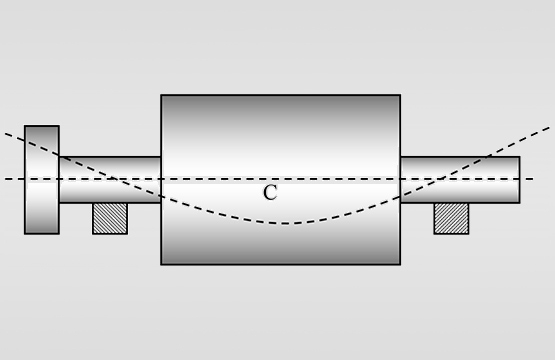
Figure 1: A drawing displaying rotor bowing or sag (above)
In the electric motor testing field, a good portion of acquired knowledge is the result of trial and error. When we first started using specialized motor test equipment, the instruments collected significant data and we knew very little about what it meant. Through constant testing and collection of empirical data from multiple sources, correlation of data with our technical experience and electrical theory background, we were able to gain a level of comfort and proficiency. Even though we had developed a comfort level with this new and emerging technology, there was, and still is, those problems that cause frustration. It is these problems that add to the learning experience and move the technology forward.
Years ago, we were performing motor testing services at a major refinery. A 4000HP medium voltage motor exhibited signs of severe rotor problems, the refinery pulled the motor and disassembled. The rotor had signs of significant heating. The Maintenance Manager was a little upset because this motor was just returned from a motor shop. It was recommended that it should be sent to a different shop.
The motor was sent out and the rotor was rebuilt, and the shaft machined. All seemed to have gone well. The motor was returned to the refinery, but-when loaded it had excessive vibration and a noticeable whining noise. The motor was again returned to the shop. It was thoroughly inspected, and no problems were found. It was tested de-energized, and no problems were found. It was then sent to a motor manufacturing facility to facilitate dynamometer testing at full load. With the motor fully loaded, in a dynamic condition, vibration and current signature data could be acquired.
Vibration data was inconclusive; however, the current signature data indicated an eccentric rotor. That assessment was met with heated debate. The motor shop guys insisted that all mechanical tolerance were fine, the vibration analyst could not correlate the findings. a rotor influence check, (RIC), was conducted. The RIC did not indicate any eccentricity.
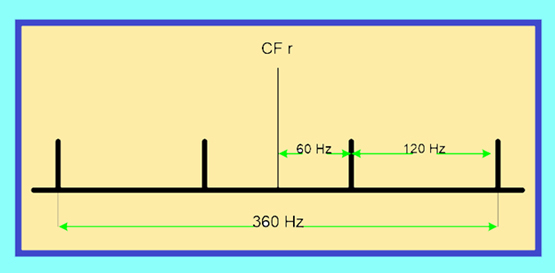
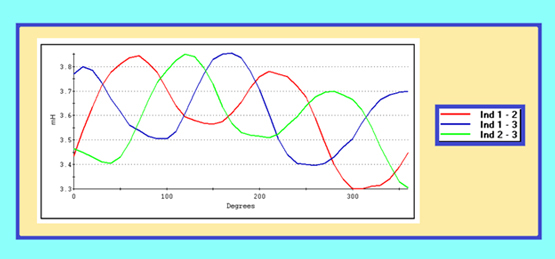
The motor displayed indications such as that displayed in Figure 2. It did not proving any semblance of the RIC data displayed in Figure 2. Suffice it say, heated discussions followed. After contacting PdMA Corporation, the manufacturer of the motor test equipment utilized. All the data and information relating to the motor and what had been accomplished was forwarded to PdMA. PdMA was naturally tentative about any decisive analysis, but- stated that they had very consistent data correlation for the indication that is identified as eccentricity. After prolonged discussion a rational decision was based upon the fact that the only data that indicated any kind of anomaly was the current signature spectrum indicating rotor eccentricity. The fact that there was obviously a problem, and had an indication, it should be investigated. The motor was sent back to the shop and disassembled once again. The machine shop checked the run out on the shaft, end bell machining, essentially everything they could attribute to eccentricity.
Once the machine shop completed their checks, the motor shop plant manager had all concerned personnel meet in the conference room. The room was silent. The plant manager asked where we go from here. There was some discussion about getting a new motor. It was decided to reassemble the motor and send it back for another dynamometer test. We hadn’t really done anything to fix the problem, citing Einstein’s quote on the definition of stupidity, with us doing the same thing expecting a different result. Then a young machinist, that had worked on the rotor, asked, “what exactly is eccentricity?” The reply was “anything that keeps the rotor from attaining magnetic center”. He then asked, “what if the rotor is axially out of magnetic center?” At this point eccentricity indications only considered radial eccentricity as a probable problem on non-sleeve bearing motors. After further discussion and having the machinist’s do some additional research and measurements, it was discovered that a thrust collar was slightly off and that would inhibit axial movement of the shaft. The rotor was machined and reassembled and sent back for dynamometer testing. At all of the load ranges, the vibration was gone and so were all indications of rotor eccentricity. Lessons were learned by all. It undoubtedly cost a significant amount of money and resources to accomplish the repairs, but the knowledge gained was priceless.
The information that was discovered was shared with the motor tester manufacturer and throughout the company. With any predictive technology, the further progression of capability is dependent on shared knowledge and experience. This also goes for problems that you may not be able to identify, make inquires form the motor tester manufacturers, motor and driven equipment manufacturers, and competent service providers.
For more information on electric motor testing consider attending one of our motor training courses. We now have online self-paced courses, virtual classes and of course our live training held at various locations or on site at your facility. We also recommend that you check out our motor data analysis wall charts.


