Training Schedule
Training for Infrared and EMT professionals world-wide.

Having a motor test instrument does not mean that you will be able to diagnose problems. Motor test instruments provide data that correlates to the interaction of the motor components and the characteristics of the circuit being measured. Over the next few months we will be exploring the measured parameters associated with de-energized electric motor testing. The first of the series is what can be determined correlating resistance, inductance and impedance data.
In this tip we are going to discuss three of the multiple options that can be utilized for fault localization. In the table below we are going to discuss three of the possible data sets that can be correlated to determine if a rotor, stator or circuit fault exists.
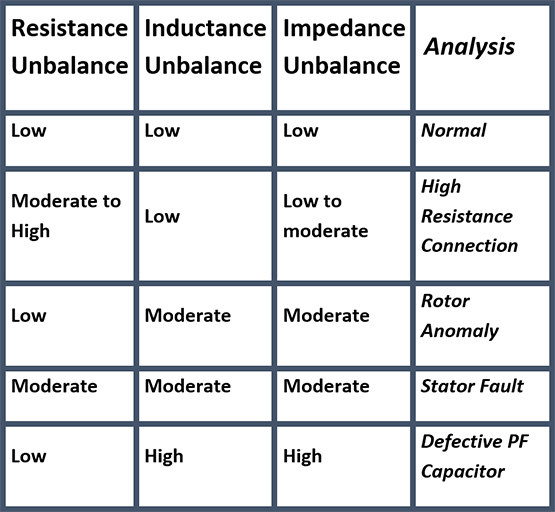
Normal: Resistance, inductance and impedance unbalance values are low and within acceptance tolerance.
High Resistance Connection: A moderate to high resistance and impedance unbalance with normal or low inductance, indicates a connection problem in the motor or motor circuit. Split the circuit at a secondary disconnect or at the motor to determine if it is in the starter, interconnections, or motor.
Rotor Anomaly: Low resistance unbalance with moderate inductance or impedance unbalance indicates that the rotor is the source of the unbalance. A stator fault would also affect resistance.
Stator Fault: A moderate unbalance in resistance, inductance and impedance indicates a winding anomaly in the stator.
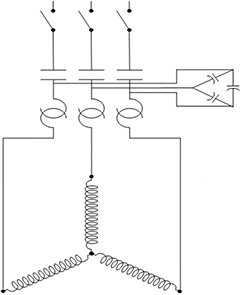
Defective Power Factor Correction Capacitor: Power factor correction capacitors for individual load correction, are installed in parallel with the motor leads usually on the load side of the starter. If one of the capacitors opens a severe reactance unbalance occurs. Resistance unbalance is low or normal with very high inductance and impedance unbalance. The motor will run normally, but- may cause a current unbalance on a common bus if several defective capacitor banks are present.
Our next de-energized test value that we are going to discuss is resistance. For more information on Electric Motor Testing, consider attending one of Snell’s highly endorsed motor testing training courses.


