Training Schedule
Training for Infrared and EMT professionals world-wide.

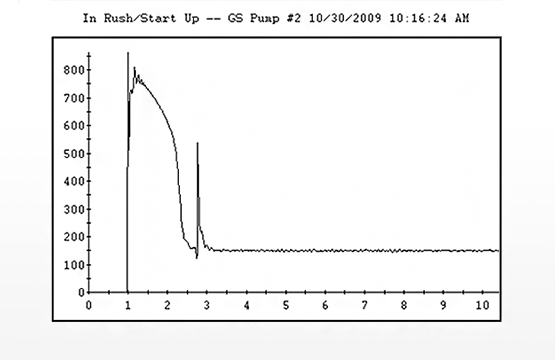
To be successful at testing electric motors and their associated circuitry, it is important that you understand the type of starting circuit the motor is utilizing. You should understand the purpose, how it is going to affect starting current, start duration, and the data acquired. You also should be aware of the hazards involved with testing differing types of starting circuits.
The Solid State Reduced Voltage Start, commonly referred to as a “Soft Start,” is common in applications that would draw considerable current if started across the line. Soft Starts incorporate silicon controlled rectifiers (SCR’s). The SCR’s reduce the applied voltage so that only a portion is sensed by the motor. The SCR’s are gated by logic circuits which are supplied by various feedback signals to enable acceleration of the motor to run speed. Soft Starts are used in both low voltage and medium voltage applications.
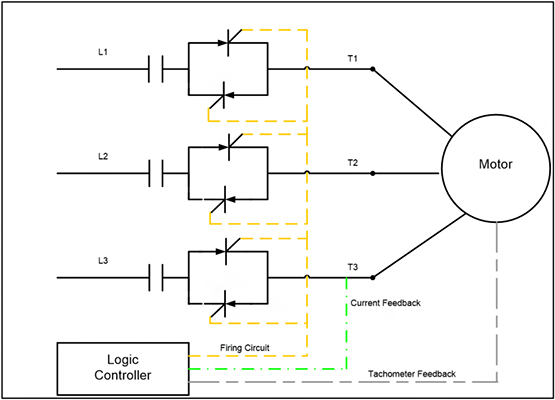
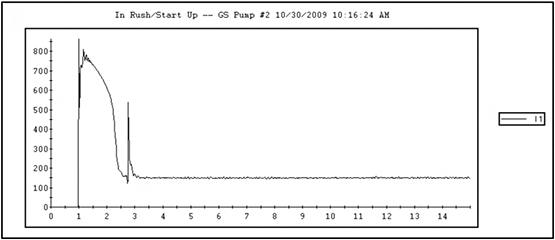
The image above displays a soft start used to accelerate a 480V 400HP motor to run speed. Under certain circumstances, configured for across the line starting, this motor could draw upwards of 4000 amps initially, while starting.
Energized testing is straight forward; hook-ups are the same as across the line starts with the easiest accessible connections usually at the output of the soft start. The important values for trending are the amount of starting current and the duration period before the soft start switches out and the unit configures across the line.
Performance of de-energized testing is where caution is necessary. Depending on the start circuit configuration, voltage from the motor test instrument may feed back into the soft start circuitry, in parallel with the motor, and damage semi-conductor components. This is particularly possible during ground insulation testing. If the soft start has a contactor on the output, the de-energized testing may be accomplished from the load side of the open contactor. If no contactor is present in the soft start output, it becomes necessary to remove the output or “T” leads for connection of the test instrument.
For more information on Starting Circuits and how to best conduct electric motor testing, consider attending one of Snell Groups Electric Motor Testing courses.


