Training Schedule
Training for Infrared and EMT professionals world-wide.

To be successful at testing electric motors and their associated circuitry, it is important that you understand the type of starting circuit the motor is utilizing. You should understand the purpose, how it is going to affect starting current, start duration, and the data acquired. You also should be aware of the hazards involved with testing differing types of starting circuits.
The Auto Transformer Reduced Voltage Start, also sometimes referred to as a start reactor, reduces voltage by increasing the phase impedances to the motor. The auto transformer windings are placed in series with each phase during start. The increased impedance lowers starting current. The transformers usually have preset output taps at 80%, 65% and 50%. These are used in circuits where considerable starting current would be required and higher starting torques.
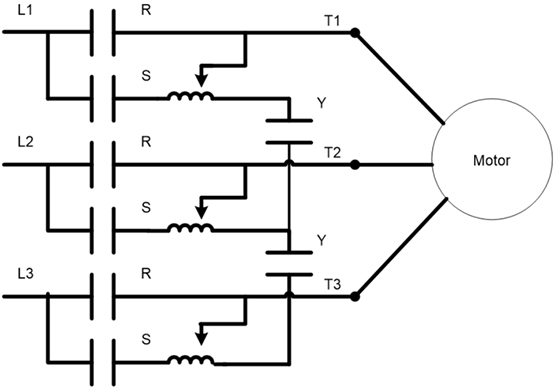
Although they can be used in low voltage applications, this type of start configuration is commonly found on many medium voltage motors. Because of the size of the reactor used on this type of starting circuit, the components are usually housed in separate cabinets. The starting circuit components and the motor should be routinely tested both energized and de-energized. Energized testing will be accomplished with connections in the secondary circuitry with CT’s and PT’s. All three phases should be monitored to ensure balanced current during starting. The starting circuit should be tested de-energized, isolated from the motor, to ensure adequate ground resistance and balanced circuit impedance.
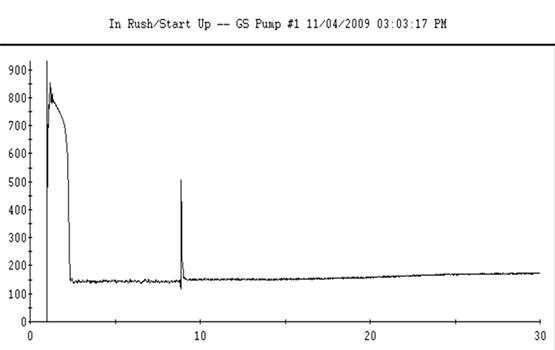
When reviewing acquired data from energized testing, remember that the data is coming from secondary circuitry, CT’s and PT’s. Any anomalous readings must be isolated to either the primary or secondary circuitry.
For more information on Starting Circuits, consider attending Snell Groups "Energized Motor and Motor Circuit Analysis" 32-hour formal training course.


