Training Schedule
Training for Infrared and EMT professionals world-wide.

To be successful at testing electric motors and their associated circuitry, it is important that you understand the type of starting circuit the motor is utilizing. You should understand the purpose, how it is going to affect starting current, start duration, and the data acquired. You also should be aware of the hazards involved with testing differing types of starting circuits.
Across the line start circuitry is by far the most common starting circuit encountered. It is also the circuity that experience the highest current during motor starting.
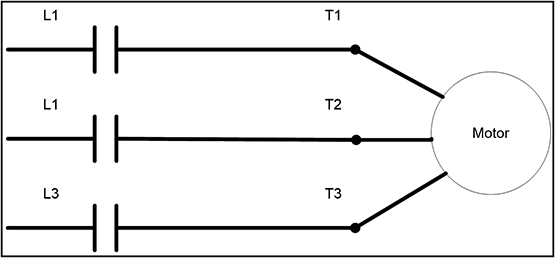
When the contactor coil is energized, the L1-3 contacts close and line voltage and starting current is connected directly to the stator windings.
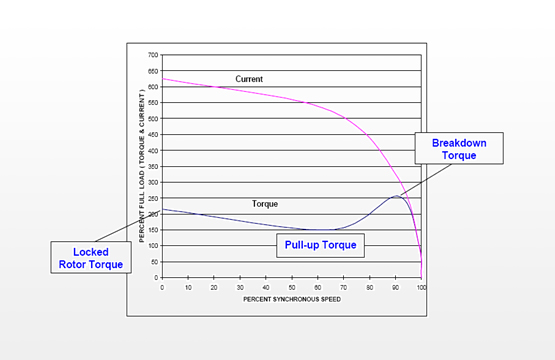
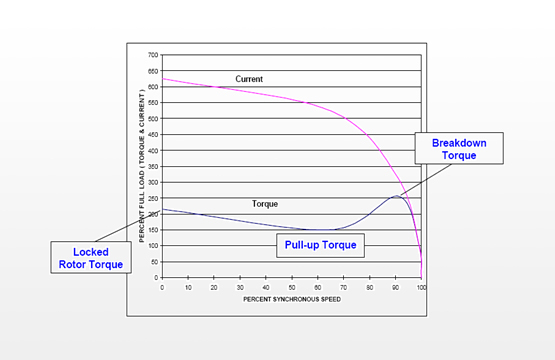
At the instant that power is applied to the stator, the rotor RPM is 0, or 100% slip. Starting current also called locked rotor current is the highest. In the graph above representing a NEMA design the motor would experience 650% of full load current the instant the start button is depressed. As the rotor speeds up the current will drop until it reaches run speed at load. Motors that start across the line accelerate to run speed rapidly.
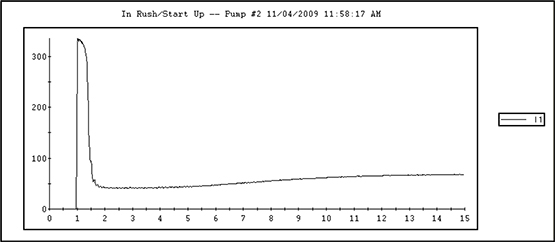
Because of the high currents that occur during across the line starts, extreme caution should be observed. In addition to wearing appropriate PPE, personnel should stand well clear of any motor panel during starting.
For more information on Starting Circuits, consider attending Snell Groups Energized Motor and Motor Circuit Analysis 32 hour formal training course.


