Training Schedule
Training for Infrared and EMT professionals world-wide.

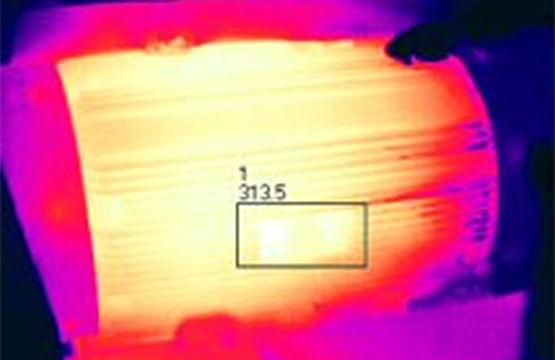
The thermal effects of product build-up doesn't just affect the surface signature. It can also impact the health of your asset. In this first IR image (above) we see a motor overheating (surface in excess of 300°F/149°C) because the cooling passages are blocked by material.
Mechanical infrared inspections can be challenging enough, so don’t make it harder by trying to inspect equipment that has a layer of dirt or other product which has accumulated on its surface.
Even just a thin layer of some types of material (by-product from a process, dust or debris from the environment, etc.) can throw your temperature readings off by dozens, if not hundreds, of degrees in some cases. How much so depends on the thickness of the material and the thermal conductivity of the substance.
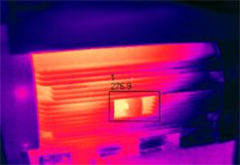
It’s why in infrared training we emphasize Fourier’s Law to such a large degree when talking about conduction. This build-up of dirt or dust is acting like nothing more than an insulator which will affect not just what you see and measure on the surface with your infrared camera, but also impact the overall operating temperature of the component. Don’t forget that material build-up affects the emissivity of surfaces too.
In our experience, we have found that light dust is one of the worst culprits when it comes to this “thermal interference”. Air as we all know can be an insulator and a light build-up of dust can trap a lot of air. Whenever possible you should clean the object as best as possible.
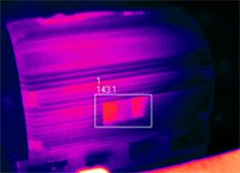
Regardless of how the device is cleaned, remember to take some time before taking a thermal image to allow it time to return to a steady state of heat transfer. That way you can get a far more accurate representation of the situation at hand.
One side-note about cleaning…If the situation is appropriate and calls for water to be safely used in cleaning, make sure the device is cool enough so that stress fractures are not caused by the excessively fast or uneven cooling of the equipment’s surface. Additionally remember that water, while evaporating, cools surfaces due to evaporative cooling, so allow additional time for these affects to diminish before proceeding.


