Training Schedule
Training for Infrared and EMT professionals world-wide.

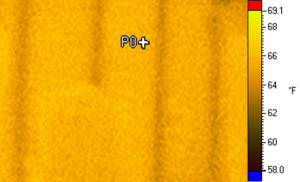
Building thermographers should always be aware of solar loading any time of year, but that is especially true during cold-weather inspections. Thermally charged exterior walls can reverse expected thermal patterns detected on the interior of a building. In some cases, this pattern reversal could be misinterpreted as an uninsulated wall when in fact solar loading has simply changed the typical direction of heat flow, causing the studs to warm up and appear hotter than the wall cavities. This is a classic pattern of an “uninsulated wall” in cold-weather conditions when viewing the interior surface.
It is quite common for building thermographers to encounter a situation where during the winter months, even though the inside temperature is warmer than outside, the sun has heated the exterior wall surface to a point where heat begins to move in the opposite direction of what the thermographer is expecting.
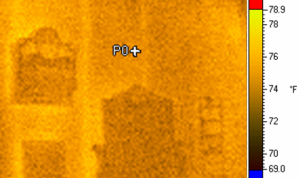
Knowing this, it is best to try and schedule infrared inspections to coincide with indoor/outdoor thermal conditions that will optimize imaging possibilities while minimizing the effects of solar loading. This means showing up first thing in the morning to inspect during the heating season. While doing so is not always practical, it can certainly help minimize the impact of solar loading on any wall, especially on those that are east or south facing. It usually also provides the thermographer with the largest temperature difference across the building envelope, optimizing the conditions needed for conducting an insulation performance inspection.
If an early morning inspection is not possible, remember that the effects of solar loading on a building can last for some time. ASTM C 1060 and the RESNET IR guideline for infrared mention that surfaces of light frame buildings not have any direct solar radiation on them for three hours prior to an infrared scan. For masonry veneer buildings the standards state eight hours.
Bottom line, if you show up to conduct an inspection any time after mid-morning on a bright sunny day, be aware of solar loading and how it might impact your inspection, both inside and outside the building.


