Training Schedule
Training for Infrared and EMT professionals world-wide.

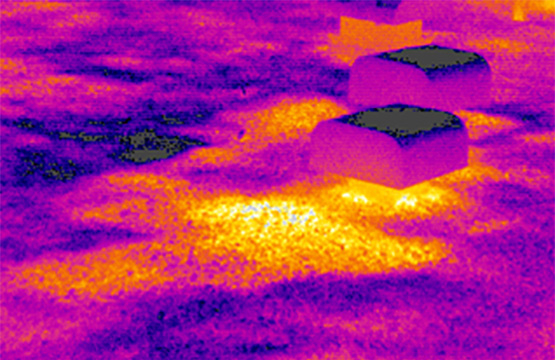
Safe low-slope IR roof inspections start even before you set foot on a building with careful job planning. It all begins with a phone call to the site contact to inquire about any specific facility safety requirements that will affect your inspection. Part of that conversation should include scheduling sufficient time for a daylight preliminary inspection of the roof prior to the infrared scan.
The purpose of this visual inspection is to view the roof before the job and note such things as potential trip and injury hazards including elevation changes, wires, lightning arrestors, drains, wet spots and weak areas. This can be done even the day of when you arrive on site. The visual inspection is also the time to look at access issues and determine a safe point of entry up on to, and subsequent exit from, the roof surface. Ideally this is done from the inside via stairs (from an elevator penthouse or mechanical room) or an enclosed wall-mounted ladder. If you are only able to get on to the roof using an extension ladder from the exterior, be sure to follow basic protocol and tie it off, or pull it up behind you, to ensure it is still there when you are finished with your inspection.
When climbing up a ladder of any kind, consider using a small backpack to carry your gear. Besides your thermal imager and an extra battery, consider that you will also have a moisture meter, spray paint, a light jacket, and possibly water and a snack. In lieu of wearing a backpack, some thermographers use a rope to haul any gear up (either in a backpack or duffel bag) if it is not practical to have it on you or will not fit through the hatch opening while on you. Either way, it is best that your hands are not tied up when climbing the ladder so that you can focus on safely ascending up to the roof surface.
Be sure to meet with any security personnel as well who may be present to explain to them what the job will entail. You should let them know how long you anticipate being there and agree on a reliable communication channel (cell phone or radios) to stay in contact with each other during the inspection.
Once on the roof, proceed with your inspection slowly and methodically. It is always a good idea to not walk while viewing the thermal image at the same time and be aware of the fact that you will be "night blind" after looking at an infrared camera’s LCD screen. To help you identify the edge of the roof in darkness, consider using either disposable hand warmers, glow sticks or even both to mark out, as needed, any hazards as well as the roof’s edge. Use a good quality head-mounted flashlight for "hands-free" operation. When working near the edge of the roof, take special precautions to be safe, possibly including having a "spotter” walk behind you or being tied off if required by safety regulations.
Finally, the recommendations made in this tip, along with any of your own, should be incorporated into a written procedure that is referenced each and every time you conduct a roof inspection. It could be something as simple as a check list or a more comprehensive “standard” that you follow each time you are on a roof. ASTM Standard C 1153 is an excellent reference for roof moisture inspections that you may want to keep in your tool kit. This will help to ensure that you are consistent in your approach to safety which, of course, is the key to any successful roof moisture inspection with thermal imaging.


