Training Schedule
Training for Infrared and EMT professionals world-wide.

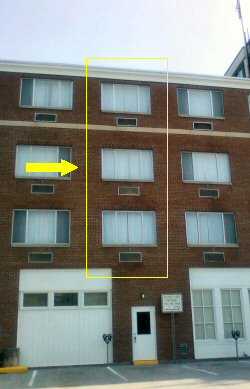 One of the first sayings I heard when I began using thermal imagers 28 years ago was "all heat loss from windows disappears above the third floor." Somewhere around the same time, after having looked at many windows, I quickly learned to use the term "appears to be" when referring to thermal images, especially those taken of buildings. It quickly became very clear why "appears to be" is an important saying that is appropriate for use by the thermographer.
Windows typically are not very efficient at reducing heat transfer compared to insulated walls. When we look at windows with an infrared camera we can see this reality tosome degree! Keep in mind, though, that windows don't always appear as we'd expect them to depending on the distance the thermographer is standing from the building as well as the height of the structure. Both parameters affect your angle of view and will impact how similar windows on varying floors may appear vastly different in the image whether it is day or night, summer or winter.
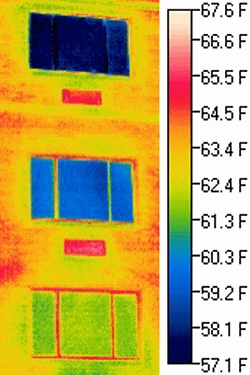 Windows on lower floors, when viewed from the exterior during "winter" inspections, typically look warmer than the walls. In warmer weather, where the direction of heat flow is reversed, the opposite is true as seen in the example to the right. Windows on upper floors, however, often look cooler regardless of the time of year. In the winter time this could be mistaken for less heat loss when in fact that is not true.
What is really happening? Windows, though not highly reflective (emissivity is approximately 0.8 in the longwave band) are quite specular or “mirror like” in their reflections. On the lower floors what we see is a reflection of the warmer terrestrial surroundings-buildings, trees, streets, etc. On the upper floors, you get more of a reflection of the
sky which, when clear, (whether summer or winter, day or night), is always very cold.
On cloudy days these differences can be less pronounced, but still apparent, depending on how sensitive you have your span and level set.
It is, therefore, the combination of emitted and reflected energy that we see in the image that gives us this apparent difference in thermal signatures between upper and lower floor windows on a building. What should you do? When possible, try to keep it equal. When that is not possible, be aware of differences in the background being reflected and try to account for them.


