Training Schedule
Training for Infrared and EMT professionals world-wide.

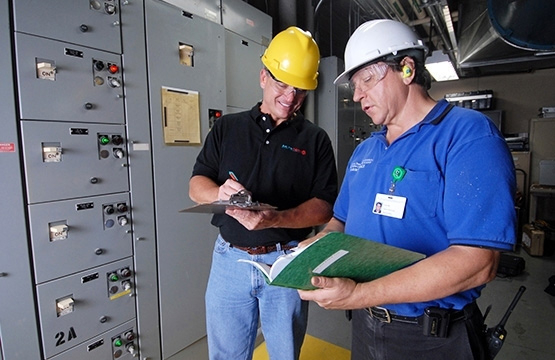
If you do an internet search on Reliability, you’ll get thousands of hits with links to hundreds of sites for companies that are heavily vested in programs that apply multiple condition monitoring technologies to their assets. Despite the fact that reliability is in full swing across every conceivable industry, there are many companies and facilities that are still doing things the old-fashioned way. This is typically seen as an annual infrared inspection of a handful of assets, usually only electrical, with no rhyme or reason to the approach. You get the idea.
Moving from this old school of thought to the new school is not as easy as some think. Making this transition is often the greatest hurdle in changing the maintenance culture from reactive to predictive. One of the basic foundational elements of a reliability program is the establishment of inspection routes. Building routes ensures that all the equipment deemed worthy of inspection is actually covered.
Why have routes?
Creating routes is a great initial step in building a program, and it is not that hard to do if you follow a few simple steps.
The first is to create a good equipment list. It is surprising how many facilities do not have an idea of what they have tucked away here and there. Often, building an equipment list requires a walk down of the entire facility. You want to list all the equipment, electrical and mechanical, that you might even remotely consider worthy of inspection. Everything you have needs to be inspected at some frequency. Determining how often is an important aspect we will address in a future tip.
Criticality assessment of the equipment on your list is the next step. It can be done fairly easily but should involve all aspects of the facility, including:
Then, breaking everything into at least five categories, potentially more.
This sounds very broad, and at first it can be. This idea is to crawl before you walk. And, there are a number of ways to assess criticality, another important future discussion.
Once you have a list of equipment and criticality assigned to each piece of equipment, break the equipment list down and arrange it by area and criticality. Doing so helps you decide how often each component should be inspected. For example, if you have a large electrical room with say 75 different pieces of equipment in it, not every apparatus in that particular room is likely to have the same level of criticality. As such it is likely that some of the equipment in that room will need to be inspected more often than others based on criticality.
You could potentially then have a route for critical equipment in that room. Call it “Electrical Room A. You could have a route for essential/non-critical items and another for non-essential equipment. The inspection intervals for each of those three routes might overlap, so say every third trip into that room you inspect everything in it.
Types of routes
Feel free to fine tune your route as you go, but as a general rule you will want to run each newly established route a minimum
The transition from a reactive maintenance posture to a predictive one is a journey, and as such it takes time and a plan for getting there. Routes are part the roadmap for this journey, and as such are essential for successful navigation down the path of equipment reliability. Once routes are established for one technology, they can easily be adapted to others, and so the journey begins.


