Training Schedule
Training for Infrared and EMT professionals world-wide.

The automatic adjustment button or "mode" on an infrared camera is an important feature that provides the thermographer with a good starting span and level during a infrared inspection. The camera builds the span (similar to visual contrast) of the image around the hottest and coldest spots in the field of view. Unfortunately, for work in buildings, that can result in span settings that are too wide to provide sufficient contrast to detect thermal anomalies in a number of situations. We demonstrate this issue throughout our Level 1 courses.
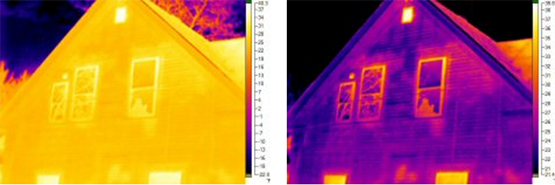
On the exterior during the heating season a window and the clear sky (night or day) can easily yield large span settings if you simply hit auto-adjust or are in automatic mode. In many cases this can cause the thermographer to miss areas of conductive heat loss or air exfiltration (image below left). A slight manual adjustment of span and level in the following image (below right) shows these thermal details far more clearly.
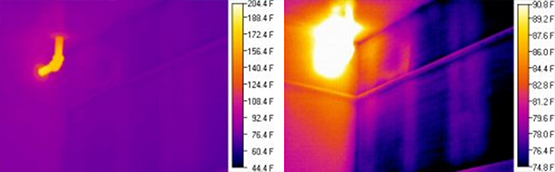
The same issue exists inside when the camera’s auto-adjust must deal with a hot steam pipe or radiator inside a building. Another example could be a cold window within the field of view. The problems seen here with insulation and air infiltration are obvious when the image is manually adjusted (below, at right), but are undetectable if one just stayed in auto mode and left the hot pipe in the field of view (image below left).
Bottom line…don’t be afraid to use auto adjust, just be sure to understand when it meets your needs and when it doesn’t work. For those of you who only have auto capability, do your best to remove any extraneous hot or cold objects from the field of view during an inspection. Changing your angle or moving closer are two simple ways this can help you maximize the contrast of your thermal image.


