Training Schedule
Training for Infrared and EMT professionals world-wide.

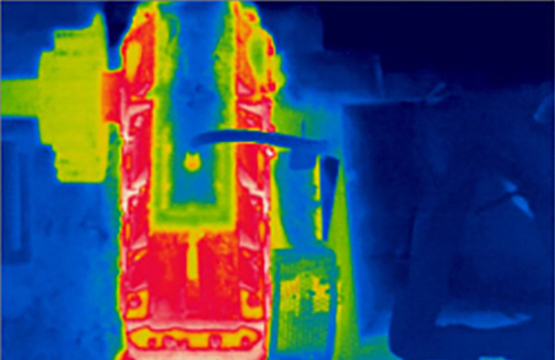
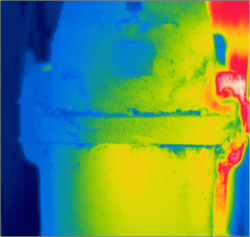
The use of infrared in mechanical inspections or trouble shooting can be challenging. It would be very difficult for someone that has little to no experience with the inner workings of a machine to do a proper infrared inspection. Some machines can be quite complex and understanding what is happening inside this machine is critical to the inspection. One example of what may on the surface be a simple machine to inspect is a reducer/gearbox. They come in many shapes and configurations. Within these different configurations there can be some pitfalls for the thermographer that is not familiar with the inner workings of the machine.
For example one of the inspection points on a reducer will be the bearings. When inspecting bearings we want to compare the temperature of one bearing against the other, a comparative approach. This isn’t always easy on a reducer.
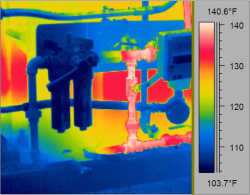
In some cases where you see what appears to be a bearing cap on the outside there may not be a bearing behind it. Quite often an input or output shaft will have bearing caps on the opposite side of the box but the shaft only goes half way through the reducer putting one of the bearings for that shaft in a position that makes it impossible to get a thermal signature on.
If the thermographer is not aware of this condition he may be comparing a bearing temp on one side of the reducer to the temperature of a blank off plate on the other side. This situation may lead the thermographer to think he has a bearing failure in progress when in fact it was just a misinterpretation of the thermal pattern.