Training Schedule
Training for Infrared and EMT professionals world-wide.

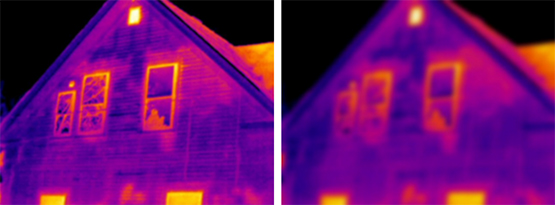
Images that are poorly focused are of not much value to both you and your clients as it affects your ability to properly evaluate an infrared image. As we see in this first example, the image on the right is blurry while the image on the left is in focus. You will notice that the out of focus image makes it more difficult to evaluate areas of apparent missing insulation or air leakage in the exterior wall of this home while it is far more apparent on the left.
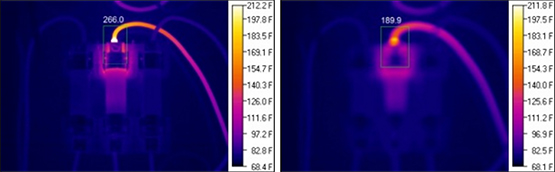
For those of you who are possibly measuring temperatures with your thermal imager, focus also impacts the accuracy of the value. While most of the time we are not concerned with absolute temperature measurements in building applications, the need may arise from time to time depending on the situation. If so, getting great focus is absolutely necessary. Notice the apparent temperature differences between the well focused image on the left and the poorly focused image on the right when measuring the temperature of this hot electrical connection in a small commercial facility.
One way to ensure that you get the best focus each time is to first try using a grayscale or monochromatic (i.e. ironbow or similar) color palette when saving an image. The following two examples are taken from the same image of a residential home. Only the color palette has been changed. Can you see apparent differences in the clarity of the two?
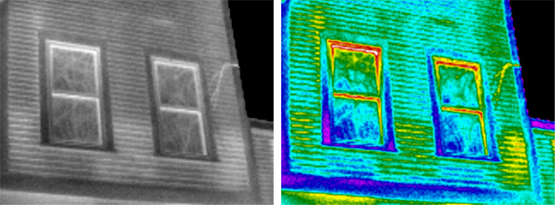
The edges of the window trim and framing are somewhat tough to pinpoint in the rainbow color palette (above, right), but appear crisper and better defined in the gray scale version. The rainbow palette often times introduces too much contrast into the scene making it more challenging to discern if you have perfect focus. That does not mean you cannot use a rainbow color palette in the field, just be sure you are getting proper focus when you do save the image. Remember you can always change your color palette, however you cannot change focus.
Something else to consider, hold the camera as steady as possible when you save an image. If your camera has a freeze function, try pausing the image first, review it for focus and other aspects, then save it.
If you are using an infrared camera with an electronic focus, this feature can sometimes make it difficult to fine tune the adjustment. Get the focus as close as you can electronically and then take a small step backward or forward, almost a rocking motion, to help find the best possible clarity.
In the end it is all about getting the best focus possible. Span, level, color palette, emissivity setting, background temperature, spot measurements…these can all be changed after the fact in either the camera or the software. Focus, however, needs to be set right the first time, prior to saving an image. The first thing people will notice about your images is the clarity. Focus is the single most important quality of a great thermal image and reflects not only on your skills as a thermographer, but also the quality of your inspection services.


