Training Schedule
Training for Infrared and EMT professionals world-wide.

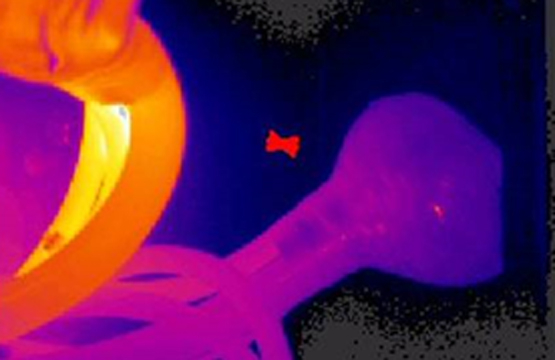
Thermal observation of electrical equipment has and continues to be the most prevalent application for infrared inspections. These inspections are accomplished by Thermographers, many of which have little or no electrical background. Being able to identify electrical anomalies is not a problem, connections are warmer, we see them. Understanding how they develop, factors that affect that development, and how to properly assess the probability of failure are essential in being a good Thermographer. In this tip, we are going to discuss electrical resistance and loading. Understanding these aspects of connection anomaly development and assessment is crucial.
Let’s talk about resistance. Resistance quite simply is opposition to current flow. There are inherent circuit properties that affect resistance:
Those are the things that we have no control over. Whenever we have current flow in a wire, connections, contact terminals, crimps, splices, etc., the electrical resistance presented by these circuit components, which in most cases is extremely low, will cause heating. The amount is affected by two things and that amount of heating can be precisely calculated. It is the value of the current flow, quantified in amperage, squared, times the amount of resistance presented by the circuit and sum of its component resistances, essentially everything in the current path. This is expressed in the equation I2R. Where “I” represents the intensity of the current and “R” represents the resistance in ohms. We can measure that in “Watts.” Whenever we have current flow in an electrical circuit, we will have heating. The length, size, and temperature of the wire will determine the amount of heat. Unbalanced resistance can cause localized heating at problem connections, (I2R). Connection problems can develop over a prolonged period or develop rapidly.
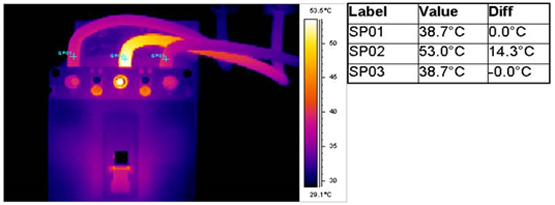
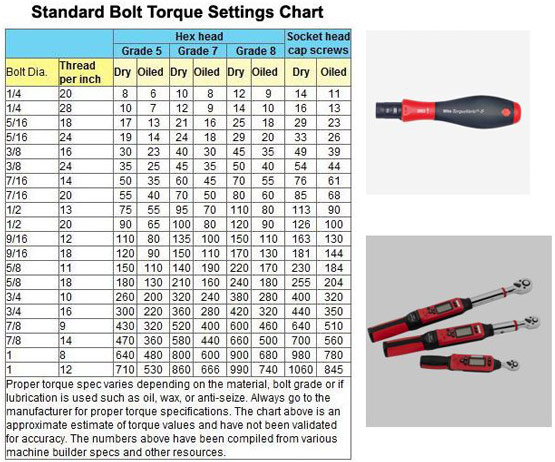
When it comes to circuit resistance, we have no control over the physical properties of the circuit and its components, However, we do have control over many aspects of the circuit. Every termination, every lug, bolt screw, splice, fuse clip, knife switch, etc. The most important ingredient to ensure the minimal occurrence of connection anomalies is rarely utilized. That is the ‘torque wrench” or “torque driver.” Every fastener has a torque specification. Those of you that do not utilize these tools are playing a game of “Resistance Roulette.” Improper torque of electrical connections is the most common cause of high resistance. The use of quality crimping tools and dies is also essential to preventing improper terminations. In fact, in a lot of regulated industries, the use of torque wrenches and high-quality crimp tools is not only mandated, but they are also required to be calibrated with a regular periodicity.
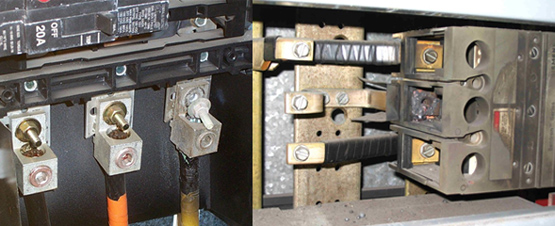
The images above show the effects of high resistance. The broken terminal lug was probably a result of over-torqueing. Thermal expansion caused the bolt to break. Note the melted center phase on the circuit breaker. Aluminum melts at 12000F and Copper melts at 19660F.
What exactly happens when a connection anomaly develops? The connection resistance is higher, the I2R is higher, the heat increases. When the heat increases, the resistance increases when the resistance increases, the temperature increases………… Eventually, you may find it conducting thermal scans or it becomes thermally unstable, the connection blows apart and the circuit fails, and you find it! Another aspect of a high resistance connection that is not considered, is the long-term effects of the connection components being exposed to higher temperatures. Annealing is a process used to get metals to exhibit certain metallurgic properties. With the metals used in most electrical circuits, annealing is not a natural thing. In other words, when metal circuit components reach the annealing temperature point, the metallurgic properties will change forever. The resistance will never be the same again, the spring tension will never be the same again, the conductivity will never be the same again. This is a major contributing factor as to why a considerable number of electrical repairs, greater than 50%, are not fixed properly the first time.
Under normal loading, a connection anomaly heats up. How exactly does loading effect that connection? We previously mentioned I2R. That can be precisely quantified in the heating effect in “watts.” Let’s look at some easily understood values:
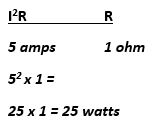
25 x 1 = 25 watts of heat generated because of the increased connection resistance. Remember that is on only the one phase at one connection point. Now that we have that established, go find a 25-watt bulb and energize it. Place your hand on it. I guarantee you will remove it before it is producing 25 watts. Let’s go back to our connection anomaly and double the load.
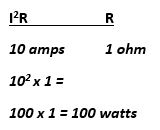
We doubled the load and quadrupled the heat. Therefore, loading and anticipated increase in loading are such critical assessment factors in determining maintenance priority and probability of failure.
In three-phase circuits, particularly motor circuits, connection anomalies cause other problems. A connection anomaly in one phase will reduce the current in that phase as a result of the increased resistance. The motor load is requiring a torque demand on the motor to drive the load. With a reduction in current in one phase, the unaffected phases will draw higher current to maintain torque demand. This will cause the motor to run hotter. The increased temperature can thermally degrade the insulation and cause premature motor failure. Unbalanced resistance can also result in negative sequence currents. With a higher resistance in the anomalous phase, the angular relationship between the other phase currents and voltage will change. Normally, voltage and current waveforms are separated by 1200. By increasing the resistance there will no longer be symmetry. Negative sequence currents will cause counter torques and as a result, will increase motor operating temperature at any load. If high resistance is identified in a motor circuit and it cannot be repaired expeditiously, then frequent temperature monitoring of the affected motor should be accomplished. If heat increases and repairs are delayed, then loading should be reduced to compensate.
As you can see understanding the effects of resistance and loading is crucial for a Thermographer. For more information on Electrical Infrared Inspections, consider attending Snell Groups Infrared Training courses.


